

Learning About Technology When I Don't Want To.
As a relationship and sex therapist, I can only be so much of a Luddite when it comes to AI companionship, dating apps, streaming platforms (i.e. Twitch), and other virtual platforms.

I had a momentous occasion on Monday.
I sent my first voice memo.
At the age of 42.
In the year of our Lord 2026.
This story is significant for two reasons.
One, it highlights my candidacy for the “World’s Worst Millennial” award. Although perhaps writing a Substack disqualifies me from this distinction.
Second, it connects interestingly to our question for the week:
How has changing technology, like AI, affected what you do?
This week, you’ll get two articles about this question.
As a reminder, this spring and summer, we’re answering 34 questions that we received from students of Dr. Kami Kosenko’s undergraduate Sexual Communication class at NC State.
Last week, we answered the question “What is the rate of couples who stay together versus split after sex therapy?”

And, “Does pregnancy make it harder to have sex, and does that hurt relationships?”

When I came across this question, I was pumped to research and write about one of the increasingly common incorporations of artificial intelligence: Social chatbots.

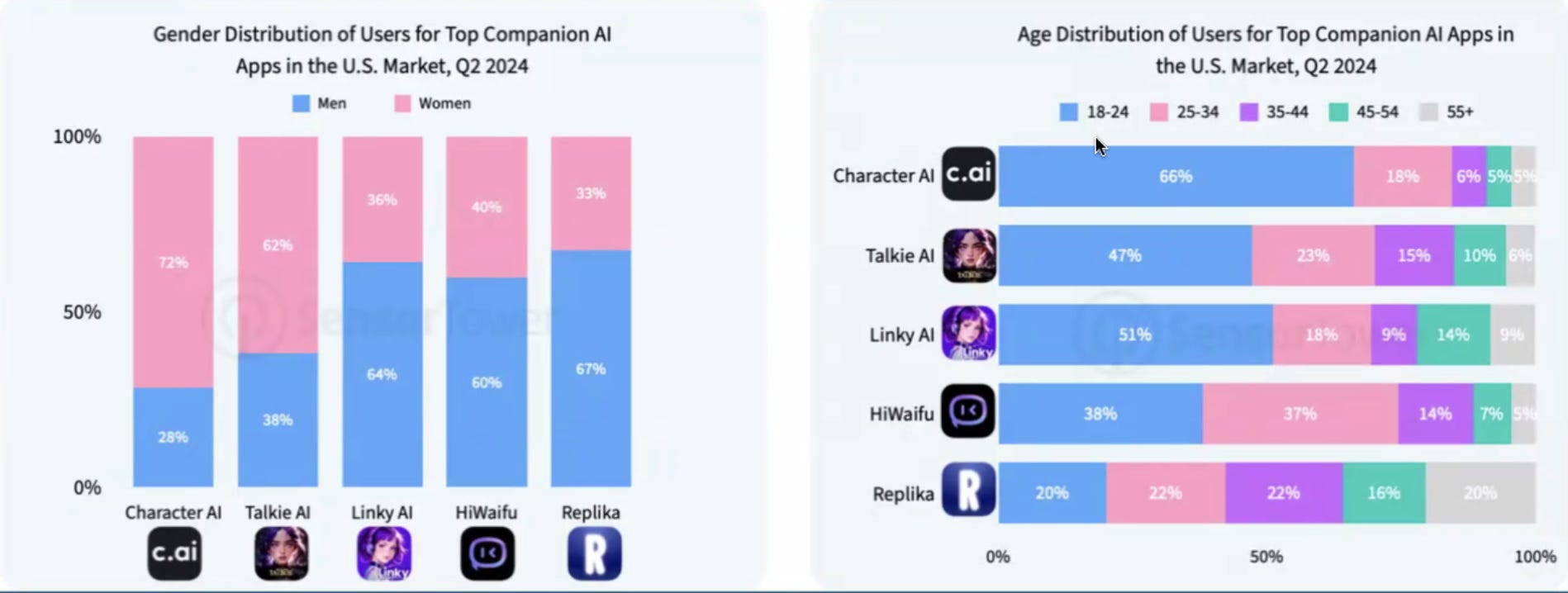
Consider the ubiquity of usage of the following five companies:
Character AI (A Google backed AI with over 20 million monthly active users, and 18 million unique chatbots)
Talkie AI (17 million downloads in the first 8 months of 2024.)
Linky AI (An anime-themed AI. I’m unclear about number of users, but this article from ScribeHow provides a good summary of its services.)
HiWaifu
Replika (40 million registered users.)
According to a 2025 article from Common Sense Media,
72% of US teens has used AI companions. 52% consider themselves “regular” users.
1 in 3 teens use AI for social and emotional support, including friendship, romance, and mental health.
1 in 3 teens choose AI over people for serious conversations.
1 in 4 has shared personal and private information with AI companions.
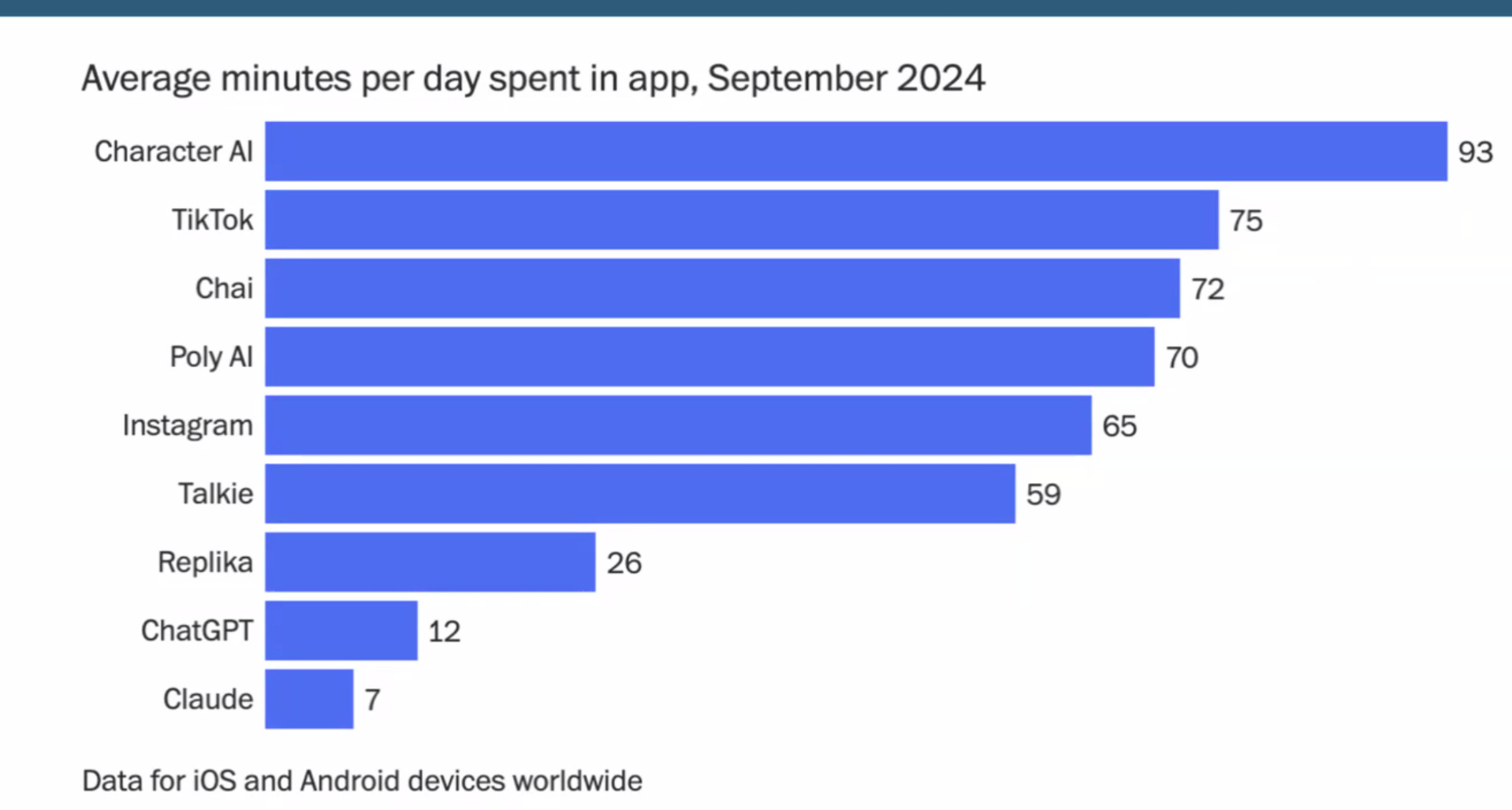
Folks invest copious amounts of time with AI companions.
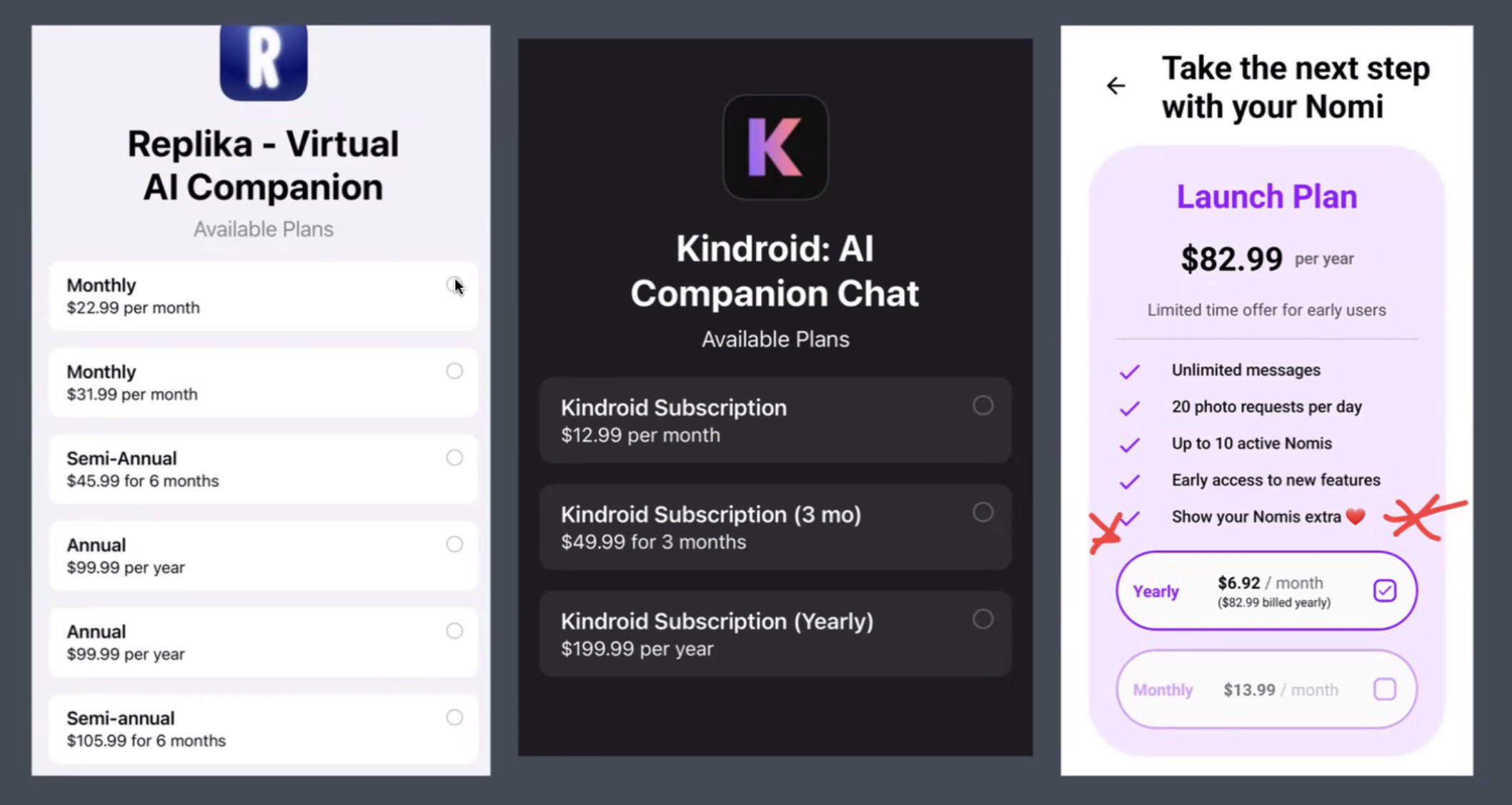
And copious amounts of money on these apps:
On Friday, I’ll write an article about the emotional consequences (positive and negative) of relationships with Replika AI, although I could have easily chosen any of the following programs.
However, today, I want to give a personal response to the question “How has changing technology, like AI, affected what you do?”
After all, yours truly has:
Never created a relationship with an AI bot.
Actively refused using AI products that supplement the administrative parts of therapy (i.e. note taking, transcriptions, etc.)
Delusions that if only he can avoid Claude and Chat GPT, that he can actively protest the enhancement of AI systems and “stick it to the (technocrat) man”.
Never created an online dating profile. (I’m quite proud of that one.)
Never created a TikTok, X, or Bluesky account.
Deleted Instagram and Threads for himself and the Sexvangelicals podcast (RIP).
There’s an increasing tension between my strong principles of investing in human relationships and unwillingness to get sucked into social media and AI anymore than I have to, and the growing percentage of current and future clients who utilize artificial intelligence to build social and emotional intimacy. (Or at least the perception of intimacy.)
I realize that I’ve reached the age of being grumpy (often appropriately so) about the next evolution of technology. I make far too many comments about how it claims to provide social advancement, when in reality, the evolution of technology, combined with the political power of technocrats, expedites the growing wealth inequity in our country.
I stand by this and many other positions about the dangers of artificial intelligence and social media.
However, as a relationship and sex therapist, I can only be so much of a Luddite when it comes to AI companionship, dating apps, streaming platforms (i.e. Twitch), and other virtual platforms.
I have to find a way to practice differentiation and not expose my own position about the limitations of artificial intelligence. I have to ask good questions. I have to understand, at least on a basic level, how these programs work, and what might encourage someone to invest time, money, and emotional resources on these products.
All of these platforms inform how people (especially younger generations) practice communication and attachment, engage with anxiety and avoidance of complex feelings and expression of needs, and set expectations for sexuality and future relationships.
My article on Friday is my attempt to practice differentiation. I’m standing by my own principles of not visiting Replika or creating my own chatbot.
Rather, I’m relying on the research and experience of folks who have chosen to invest in relationships with social chatbots. I’m excited to share reflections from a group of sociologists at the University of Wisconsin-Milwaukee on Friday. I also highly encourage you to check out this article by Thea Lim at The Walrus; it’s a phenomenal window into the world of chatbot relationships:

Julia and I are certified sex therapists and licensed psychotherapists in North Carolina and Massachusetts. We would be happy to help you and your partner create a healthy, playful, positive relationship.
We offer free 30 minute consultations with couples who are interested in pursuing relationship and sex therapy. We also offer relationship coaching to folks who are navigating religious deconstruction.
Paying members get a free 60 minute consultation for relationship therapy (for residents of Massachusetts or North Carolina) or relationship coaching (for couples who are deconstructing from high-control religions) with me or Julia.
If you liked this article, click on the heart icon at the bottom!
By subscribing to Relationship 101, you’ll get two essays each week that explore how to practice the best communication possible:
Let’s heal together!
Jeremiah and Julia